Showing posts with label aroma. Show all posts

Wednesday, September 04, 2024

Vanillin: The Chemistry Behind Vanilla's Aroma and Its Role in Wine Aging

Vanillin, the primary component of the flavor and aroma of vanilla, is a well-known example of a food flavor with a soothing and pleasant fragrance. It is widely used in culinary practices, especially in baking and desserts. The chemical properties of vanillin are fascinating. With a relatively low molecular weight and a volatile nature, vanillin easily vaporizes during cooking, releasing its characteristic aroma into the surrounding air. This explains why the smell of vanilla often permeates a kitchen when vanilla-infused dishes are prepared.

From a chemical perspective, vanillin is unique due to its solubility in water. Typically, molecules composed solely of carbon and hydrogen, like many hydrocarbons, are insoluble in water because they cannot form hydrogen bonds with water molecules. However, vanillin is different. Its structure includes oxygen-containing functional groups, specifically an aldehyde, a hydroxyl group, and an ether, all attached to its aromatic ring. These groups allow vanillin to form strong hydrogen bonds with water, making it water-soluble. To illustrate, about one gram of vanillin can dissolve in 100 mL of cold water.

This solubility plays a critical role in winemaking, particularly in the aging process of wines in oak barrels. The wood in these barrels contains lignin, a complex polymer that, over time, breaks down and releases vanillin into the wine. This slow leaching process imparts a subtle vanilla flavor to the wine, contributing to the "finish" or aftertaste that is highly valued in aged wines. The presence of vanillin enhances the complexity and richness of the wine’s flavor profile, making it a key factor in the art of winemaking.
Vanillin: The Chemistry Behind Vanilla's Aroma and Its Role in Wine Aging

Monday, July 15, 2024

The Science of Flavor: Understanding Taste and Aroma

Flavor is a biological perception, a sensation produced by a material taken into the mouth. It is the aggregate of the material's characteristics that produce the sensation of flavor, perceived principally by the aroma receptors in the nose and taste receptors in the mouth. There are five basic flavors: sweet, sour, bitter, salty, and savory. What we experience as flavors is a combination of these tastes with odors.

A flavor can be considered the essence of food. Historically, there were thought to be just four flavors, but in recent years, the fifth flavor, umami, was identified. Umami, derived from the natural amino acid glutamic acid and certain nucleotides, is best noticed in monosodium glutamate (MSG). The Japanese named this flavor umami, which translates to savory in English.

Natural products contain aroma chemicals that, together with taste, create flavor. Coffee, for example, contains over 800 aroma chemicals, while vanilla's major flavoring component is vanillin. Some synthetic flavorings are prepared using these major components, while others are complex mixtures.

Flavor creation is often influenced by certain chemical processes such as fermentation, roasting, or frying. These processes initiate chemical reactions in the food, leading to specific flavor generation. For instance, the flavor of fried onions results from a reaction between its proteins and carbohydrates.

Almost all flavors can be classified into categories: fruit, vegetable, spice, beverage, meat, fat, cooked, empyreumatic, and stench. Fruit flavors, like those in apples or strawberries, often rely on a combination of sweet and tart notes. Vegetable flavors can range from the bitterness of kale to the earthy taste of mushrooms. Spices, such as cinnamon or pepper, add distinctive pungent or warming sensations. Beverages like coffee and tea offer complex flavors from roasting and fermentation processes. Meat flavors can vary from the savory depth of umami-rich beef to the lighter taste of poultry. Fats, such as butter or olive oil, contribute richness and mouthfeel. Cooked flavors emerge from processes like grilling or baking, producing new, desirable flavor compounds.

In recent years, there has been increased interest in understanding and replicating flavors. Advances in food science have allowed for the creation of more precise synthetic flavors and the enhancement of natural ones. This research not only improves the culinary experience but also has applications in nutrition, helping create healthier food options without compromising on taste. As our understanding of flavor chemistry continues to grow, so too will our ability to innovate in the kitchen, creating new and exciting culinary experiences.
The Science of Flavor: Understanding Taste and Aroma

Tuesday, December 13, 2022

Sulfur compounds in coffee

There have been more than 1,000 volatiles identified in roasted coffee beans, making it one of the most complex aromas in the world. A number of families of compounds are significant contributors to coffee’s aroma.

Coffee contains several sulphuric compounds that contribute to its signature aroma and taste due to their low odor thresholds. The different amino acids in coffee beans also contain sulfur.

Trace levels of specific sulfur-containing compounds often are responsible for imparting the characteristic pleasant taste and aroma of coffee, while increased concentrations or absence of selected compounds may be responsible for variations in flavor among different blends.

Sulfur compounds are usually not present in green coffee, with the exception of dimethylsulfide. Different roasting and processing methods can induce different reactions in the sulfur content, producing different tastes, odors, and aromas.

When coffee beans are roasted, amino acids and sugars combine and begin a profusion of reactions that ultimately create the smell, taste, and color of the coffee. This is called the Maillard Reaction and is responsible for turning a few dozen compounds inside the coffee bean into hundreds, even thousands of aromatic compounds that make up the unique flavors of coffee.

Several sulfur-containing compounds are of importance, including 2-furfurylthiol, with an aroma that on its own is actually commonly described as ‘roasted coffee’.

Another sulfur-containing compound, 3-mercapto-3-methylbutyl formate, is brilliantly described as having a ‘catty’ odour in isolation.
Sulfur compounds in coffee

Friday, December 11, 2020

Flavor and aroma of coffee

The plant produces red cherry-like fruits containing two seeds, which, after being separated from the fruit pulp, are known as ‘green coffee’. When received, they are blended by manufacturers with green beans from other origins and roasted to achieve the characteristic flavor and color associated with coffee beverage of their brand.

There are two main species of coffee: arabica and robusta. As a general rule, arabica reveals a sweet, suave, fragrant, fruity, often acidic flavor. Conversely, Robusta is full-bodied, tonic, with a less pronounced aroma but stronger in caffeine.

Chemical composition of lipid, protein and carbohydrates in coffee contains the precursors function for developing flavor, aroma composition of the coffee beverage.

The polysaccharides which make up ~60 % of the green bean’s dry weight, consist of three major types: mannans or galactomannans, arabinogalactan-proteins (AGPs) and cellulose. In addition, there are small amounts of pectic polysaccharides. Carbohydrates have one of the crucial roles in coffee quality – forming aroma, flavor and color in the roasting process.

The lipid content in coffee grounds ranges from 10 to 17%. It has been reported that fatty acids composition in coffee is important to bring mouthfeel characteristics (body, texture) and essential aroma, flavor compounds to the coffee beverage. The aroma and flavor perceived in food are usually influenced by the type and concentration of lipids. Lipids also influence the mouth feel of several foods

The fatty acid (FA) fraction of triacylglycerols releases byproducts of oxidation, which are induced by temperature and mainly comprise aldehydes that react with intermediates of the Maillard reaction, providing additional flavor and aroma to the coffee.

Proteins are known to important flavor precursors in the coffee bean roasting process. It is because of protein-aroma compound or protein flavor compound binding. During roasting, proteins are denatured and fragmented. Proteins have a positive correlation with phenolic compounds and coffee mealnoidins, which can be explained by protein and phenolic compound involvement in coffee melanoidin formation.
Flavor and aroma of coffee


Friday, November 06, 2020

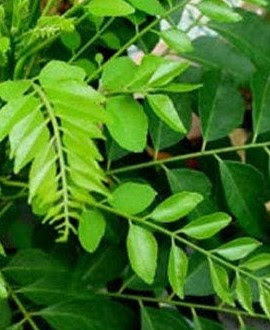
Flavor of curry leaves

Curry leaves (Murraya koenigii) are a popular leaf-spice used in very small quantities for their distinct aroma due to the presence of volatile oil and their ability to improve digestion.

It belongs to the family Rutaceae (Citrus family) that consists of approximately 150 genera and 1500 species. Curry leaf is an important leafy vegetable. Its leaves are widely used in Indian cookery for flavoring foodstuffs.

Curry leaves is commonly found in the outer Himalayas, from the Ravi eastwards, ascending to 5,000 feet, in Assam, Chittagong, Upper and Lower Burma. It is also found in evergreen and deciduous forests of peninsular India, often as underwood

The leaves have a slightly pungent, bitter and feebly acidic taste, and they retain their flavor and other qualities even after drying. It is an important ingredient in Indian curries owing to its fragrance and aroma. This plant is known to be the richest source of carbazole alkaloids.

The major component responsible for the aroma and flavor has been reported as D-α-pinene, D-sabinene, caryophyllene, D-α-terpinol, cadinol, di-α-phellandrene, dipentene and cadinene.

Essential oils from curry leaves serves as a main component in the production of soap, lotions, massage oils, diffusers, potpourri, air fresheners, body fragrance, perfume oils, aromatherapy products, bath oils, hair treatments, and many more.
Flavor of curry leaves


Wednesday, July 18, 2018

Aromatic compounds of coffee

Aroma science is highly complex. Researchers typically analyze the fragrances evolved during coffee bean roasting by gas chromatography coupled with olfactometry, in which skilled testers sniff and define the smell of each recognizable element.

In Italy and France the aroma and taste of coffee are importance. Consumption of coffee is part of the culture and in France the name “café” stands for the drink as well as the place where it can be served. Espresso is a preferred beverage in Italy and France because of the strong aroma of the coffee.

Aroma substances are volatile compounds which are perceived by the odor receptor sites of the smell organ, i. e. the olfactory tissue of the nasal cavity. Coffee aroma is composed of a great variety of functional chemical groups, where the composition depends on factors such as species and variety, growth conditions and crop, storage, roasting degree, let alone all other process conditions.

Coffee contains several hundred different chemical compounds, but only minorities of these contribute to the aroma. A compound’s contribution to aroma is dependent on both its concentration and the threshold at which its smell can be perceived by humans.

The basic taste sensations in coffee are formed by volatile compounds present in coffee beans. They are the main factors responsible for the aroma. They belong to various chemical groups: aliphatic hydrocarbons, sulfur compounds, pyrazines, pyridines, oxazoles, pyrroles, furans, aldehydes, ketones and phenols but only a relatively small group of them (called the key components) is responsible for the aroma of coffee, such as dimethyl disulfide, which is an essential element for improving the fragrance of coffee aroma.
Aromatic compounds of coffee

Wednesday, April 12, 2017

Coffee bean roasting process

Raw or green coffee has no flavor or aroma and has an unpleasant taste. For use as a beverage, it is roasted, powdered and brewed and the aqueous extract used as a beverage with or without the addition of milk, sugar and other substances.

Coffee beans are usually roasted in large batch dryers, which spin and heat them evenly at temperature that reaches 550 ° F. During roasting process, about 20 percent of the water content of the green beans evaporates and gases are released. In addition, the beans’ starch content is converted to sugar.
Roasting releases the oils and acids that give each coffee its unique flavor. The volatile oils and acids that give coffee is tempting aroma and delicious flavor are developed during the roasting process.

The flavor of roasted coffee, to a large extent depends upon the manner and extent of roasting. The flavor and aroma of coffee are best when it is freshly roasted and deteriorate on standing.

Sucrose which is the most abundant simple carbohydrate present in green coffee, acts as an aroma precursor during roasting, generating several classes of compound, such as carboxylic acids furans, and aldehydes, which will affect the flavor of coffee. Sucrose is found to be destroyed quickly at the early stages of roasting.
Coffee bean roasting process

Friday, October 07, 2016

Properties of vanillin

Vanillin, perhaps the most important aroma compound, occurs in the bean of Vanilla planifolia. At present in the world flavor market, only 0.2% of this compound is extracted from beans; the remainder is produced synthetically.

Vanilla planifolia
Vanillin is a colorless, crystalline solid (melting point 82-83 ° C) with a typical vanilla odor.

Because it posses aldehyde and hydroxy substituents, it undergoes many reactions. Additional reactions are possible due to the reactivity due the aromatic nucleus. Since vanillin is a phenol aldehyde, it is stable to autooxidation and does not undergo the Cannizzaro reaction.

In common with many other low-molecular weight phenolic compounds, vanillin displays antioxidant and antimicrobial properties and hence has the potential for use as food preservative.

It is active against both Gram-positive and Gran-negative food spoilage bacteria and has been shown to be effective against both yeasts and moulds in fruit purees and laboratory growth media.

Vanillin exhibits in vitro antifungal activity against the yeasts Candida albicans and Cryptoccoccus neoformans. Minimal inhibitory concentrations of vanillin for C. albicans and C. neoformans were found to be 1250 and 738 ug/ml.

Vanillin is found to be a good antioxidant. It offers significantly good protection against protein oxidation and lipid peroxidation induced by photosensitization in rat liver mitochondria.
Properties of vanillin

Monday, September 28, 2015

Rice flavor

There are many distinct yet subtle flavors and textures that influence rice eating quality. In addition to aroma, flavor is another factor contributing to consumer acceptance and repeat purchase of rice. Rice consumers are aware of these flavors and often demand what they perceived to be the best quality rice.

There are many chemicals that contribute to the aroma and flavor of rice. 1-butanal, 1-hexanal, 1-heptanal, methyl ethyl ketone, 1-pentanal and propanal are responsible for what is known as the ‘old’ or ‘stale’ aroma of stored rice, while 1-butanal and 1-heptanan are involved in the aroma of ‘refresh’ rice.

The stale flavors associated with old rice that had been stored at warm temperatures for some time before cooking has been attributed to the formation of free fatty acids by lipase activity and to lipid oxidation, not to these aroma compounds.

The lipid oxidation products, pentanal, and hexanal, have been implicated in stale rice flavor. These aldehydes can be formed by lipoxygenase activity on linoleic and linolenic acids.

There is no single compound found in cooked rice that can described as ‘cooked rice’ and the aroma probably arises from a mixture of several compounds. The majority of compounds in the headspace cooked rice are lipid oxidation products.
Rice flavor

Friday, June 27, 2014

Food aroma

The aroma is one of the most important attributes of food and is directly linked to the quality of the product and the consumer’s acceptance.

Aromas are detected by olfactory epithelium in the upper part of the nasal cavity. For any food to have aroma, it must be volatile, but volatile substance can be detected in very small amounts.

Aroma compounds have small molecules with a molecular weight generally lower than 400 g/mol.

The aroma molecules may be transported directly into the nose by sniffing a food, or they may be released from a food during mastication and carried into the nose retronasally.

Often the terms flavor and aroma are used interchangeably. Food flavor and aroma are difficult to measure and difficult to get people to agree on.

Natural aromas are isolated directly from natural source plant or animal, Natural identical aromas are produced synthetically, but they are chemically identical to their natural counterparts. Article aromas are also produced synthetically.

Aroma is a valuable index of quality. A food often with smell bad before it looks bad, and old meat can be easily detected by its smell.

Proteins particularly affect aroma perception, due to interactions with aroma related compounds.

Lipids greatly influence flavor through their effect in perception (mouthfeel, taste and aroma), flavor generation, and stability, whereas carbohydrates tend to increase retention in the matrix.
Food aroma

Friday, April 25, 2014

Characteristics of flavor components

Flavor is one of the main food sensory attributes of crucial importance for consumers’ acceptance of food. 

Hundreds of chemicals present in natural foods and flavorings have already positively identified but some still defy categorization. The compounds responsible for flavors are usually a complex mixture of components with varying molecular weight and polarity.

Many of the chemicals which have most significance on the odor and flavor profile are known to be present only in trace quantity and often demonstrate very limited stability when isolated purified.

Many of the compounds contribute desirable odor or flavor characteristics to some of favorite foods such as cheese, fresh milk and cream, heated butter, mushrooms, green beans and peas.

Some are responsible for pleasant aromas, as is typical in fresh fruits and vegetables; others produce offensive odors and flavors, often causing major problems in the storage and processing of foods.

Esters, alcohols, aldehydes, terpenoids, ketones, ethers and other volatile flavor compounds contribute to the unique flavor characteristics of food.

Esters contribute floral and fruity aroma attributes. Alcohols and aldehydes contribute green and pungent aroma attributes.

During the ripening and maturation process of fruits, significant changes occur through a series of biochemical reactions that contribute to the development of desirable compounds from carbohydrates, lipid, proteins and other plant constituents.
Characteristics of flavor components

Thursday, January 03, 2013

Coffee aroma

The enticing aroma of coffee cannot be characterized by a single chemical component but is a combined response to many different chemical component.

Coffee aroma and flavor determine about 80% of the quality of a roast coffee beverage. Generally, most of the aroma compounds are generated at medium roast. Aroma formed during the roasting process normally at 210 °C for 6-10 minutes.

The coffee oil, which comprises about 10% of the roast beans carries most of the coffee aroma. More than 800 volatile compounds have been found in roasted coffee.

Many of the aromatic components of roasted coffee and particularly of coffee oil itself, are extremely susceptible to deterioration by the action of moisture and oxygen.

The staleness of coffee is due to the oxidative changes that take place with certain coffee constituents. This is prevented by the presence of carbon dioxide in roasted coffee. However, on storage, carbon dioxide is lost and so are the flavor and aroma.

In commercial practice, therefore roasted coffee has to be packed in an atmosphere of low oxygen content, either by CO2 gas-flushing or vacuum packing.
Coffee aroma

Tuesday, June 26, 2012

Aroma chemicals

Aroma chemicals are uniform compounds, which can be both of natural or synthetic origin. The aroma component of flavor is due to a complex mixture of volatile 0rganic chemicals. It comprise organic compounds with a defined chemical structure.

Aroma chemicals may be added directly to foods and beverages or used as raw materials in flavor compositions.

A simple flavor may have 100-300 volatile constituents such strawberry or grape. The thermal generation of volatiles during cooking and processing is one of the key mechanisms for the formation of aroma in food. Foods that are more complex in flavor, for example those resulting from Maillard reaction may contain 900 or more volatile constituents.

Other than Maillard reactions, there are other chemical reactions, including Strecker degradation, caramelization, the degradation of thiamin and ferulic acid and lipid oxidation.

They are partially lipid-soluble organic chemicals of low molecular weight. Many of these have been identified since the invention of gas chromatography.

There are nearly 7000 compounds of aroma chemicals in foods. Many of these aroma compounds are present naturally in foods while other are the result of fermentation, thermal processing or deteriorative reactions e.g. lipid oxidation.
Aroma chemicals

Saturday, September 19, 2009

Chocolate Flavor and Aroma

Chocolate Flavor and Aroma
The essential role played by correct fermentation and drying of the cacao beans in developing the ultimate flavor of the chocolate has been emphasized.

The true chocolate flavor is finally developed by the roasting process.

Early attempts in 1912 to isolate chocolate “aroma” used the process of steam distillation of roasted cacao followed by hexane extraction.

Linalool was identified as a major component of the extract together with variety of acids and esters. Later it was identified to be more compounds.

In 1958, researcher applied the relatively new gas chromatography technique and added to the list.

The fundamental stages in the formation of chocolate aroma begin with the production of flavor precursors during the tropical fermentation, and these are change at the bean roasting stage into compounds typical; of the true chocolate flavor.

It noted that in 1937 that cocoa butter from well-fermented beans produced no chocolate flavor on roasting – the precursor were therefore not in the fat phase.

It is also found that the precursors were soluble in methanol, and both of these facts formed a very useful basis for later experimental work.

However despite the observation on cocoa butter, this fat does contribute certain flavor characteristics to chocolate, particularly milk chocolate, and the nature of the flavor depends on the method of extraction, the degree of roast and whether it is obtained from alkalized or unalkalized nibs.

For milk chocolate, deodorized or partly deodorized cocoa butter is often used.

Later research work on the precursors produced evidence that amino acids and sugars are concerned in the formation of finals “aroma” compounds and in the roasting process it has been shown that degrading of both free amino acids and reducing sugars occurs.
Chocolate Flavor and Aroma

Thursday, September 14, 2006

Coffee Flavor

The aroma of a coffee is responsible for all flavor attributes other than the mouthfeel and sweet, salt, bitter, and sour taste attributes that are perceived by the tongue. Therefore, it might be said that the aroma is the most important attribute to specialty coffee. Even instant coffee has the components responsible for stimulation of our taste buds. The difference, however, is that instant coffee lacks most of the aromatic volatile compounds causing a dramatic decrease in the overall flavor. 

 Aroma is perceived by two different mechanisms. It can either be sensed nasally via smelling the coffee through the nose or retronasally. Retronasal perception occurs when the coffee is either present in the mouth or has been swallowed and aromatic volatile compounds drift upward into the nasal passage. The number of aromatic compounds found in coffee increases every year. 

Today, the number is well over 800 and as our analytical methods become more precise more will be uncovered. Yet, the perception of aroma is dependent upon both the concentration of the compound and its odor threshold. With that said, understanding coffee aroma is not as difficult as understanding how over 800 compounds interact with the olfactory epithelium. It is probable that a relatively small group of compounds that share both a high concentration and a low odor threshold make up the fragrance we know as coffee aroma.  

Listed the following the development of volatile compounds in coffee :
1) Maillard or non-enzymatic browning reaction between nitrogen containing substances, amino acids, proteins, as well as trigonelline, serotonine, and carbohydrates, hydroxy-acids and phenols on the other.
2) Strecker degradation.
3) Degradation of individual amino acids, particularly, sulfur amino acids, hydroxy amino acids, and proline.
4) Degradation of trigonelline.
5) Degradation of sugar.
6) Degradation of phenolic acids, particularly the quinic acid moiety.
7) Minor lipid degradation.
8) Interaction between intermediate decomposition products. 
Source: Coffeeresearch.org 
Coffee Flavor

Sunday, August 06, 2006

Nature of flavor components

Plant materials used in foods depend for their characteristics aroma and flavor on a complex blend of organic chemicals produced in the plant tissues during its normal growth.

Hundred of chemicals present in natural foods and flavorings have already positively identified but some still defy categorization.

Nature is complex and does not readily reveal many of her secrets. The techniques necessary to separate aromatics compounds from inert plant tissues are often involved and tedious

Many of the chemicals which have most significance on the odor and flavor profile are known to be present only in trace quantity and often demonstrate very limited stability when isolated purified.

All these factors make research into the chemistry of flavor components one of extreme complexity but, in spite difficulties, considerable progress has been made.
Food Flavor

The most popular articles

WORLD OF NUTRITION SCIENCE RSS

COOKING INGREDIENTS RSS

BannerFans.com