Showing posts with label usage. Show all posts

Wednesday, February 08, 2017

What are the differences between dill weed oil and dill seed oil?

The majority of the world’s dill crop (Anethum garveolens) is used for two types of dill oil: dill weed oil and dill seed oil

Dill seed oil is steam distilled from the crushed dried fruits, whereas dill weed oil is steam distilled from the complete herb, including the unripened fruits. The two oils differ in composition, therefore in odor and flavor.
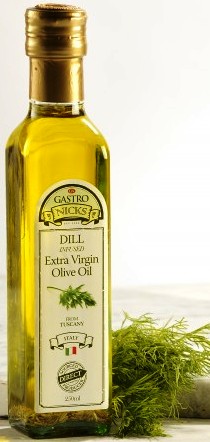
Dill weed oil 
The unripe fruits and the leafy tops are the source of what is termed dill weed oil. This is steam-distilled for flavoring and seasoning purposes in the food industry for such products as pickles, condiments, meat reparations, potato chips, sauces, dips, chewing gums and candy. Dill weed oil made from the herb at the immature fruiting stage has largely replaced both dill leaf and dill seed oil in commercial food usage.

Dill seed oil 
However, some ripe seeds are distilled for dill seed oil, which is used in perfumery and soap-making. Oleoresin from dill seed oil is used in infusions, tinctures and fluid extracts, which are of limited commercial importance.

The oil is a very mobile liquid, almost colorless to very pale yellow when fresh, becoming darker with age. The odor is light, pleasant, fresh but hot, strong spicy, resembling caraway, with warm, sweet, aromatic but more burning, camphorish taste than herb oil, and is placed in the caraway group.
What are the differences between dill weed oil and dill seed oil?

Monday, July 13, 2015

Mustard oil flavor

Mustard oil is a spicy oil made from mustard seeds. Mustard oil is produced by steam distillation of the residue (press-cakes) obtained after expressing the seeds of the oil The essential oil forms upon maceration of the comminuted seeds in warm water that releases sinigrin, a β –glucopyranoside.

The essential consists of more than 90% allyl isothiocyanate the remainder is chiefly allyl cyanate and carbon disulfide.

Mustard oil is used in mustard paste and other dishes that need the pungent, volatile flavor of mustard or horseradish. Many Japanese food products use mustard oil. It is also used for cooking in northern and northeastern India and as an ingredient in making different kinds of pickles.

Many processed meat preparations such as bologna, frankfurters and salami require mustard flavor. It is useful in salad dressing, condiments and soups.

The ideal mustard oil attributed were
*Good mustard flavor/smell, pungent aroma and taste
*Smell should be strong
*Golden yellow
*Light
*No impurities
*No foam, no smoke
*No burning of throat

Mustard oil is highly volatile, pungent and therefore hazardous. It needs special packaging such as aluminium bottles, placed inside a mild steel jacket.
Mustard oil flavor

Monday, June 22, 2015

The uses of peanut oil

High grade peanut oil is an excellent salad oil. The various grades of this oil are used for making soap and for industrial purposes. Smaller quantities of peanut oil are used in margarine and bakery shortenings manufacturing as well as salad dressing.

Peanut oil is the main ingredient in vanaspati, a hydrogenated product make in India that resembles natural butter and ghee in appearance. It is used as a vegetable ghee substitutes.

The fatty acids in peanut oil (80-83% unsaturated and 17-20% saturated) are responsible for its stability in cooking/deep frying and its shelf life stability. The oil is considered one of the finest of fats for deep-fat frying of potato chips, doughnuts, croquettes, oysters and other foods for which deep-fat cooking is desirable.

Peanut oil can take so much heat before it begins to make and scorch that it allows food to cook thoroughly and yet brown satisfactorily on the outside.

Roasted peanut oils, highly aromatic ails, and peanut extract are high-value products with strong peanut flavor and nut aroma. These products have application in flavor compounds, confections sauce, baked goods, breakfast cereals, flavorings, frozen dairy desserts and flavor compound bases.
The uses of peanut oil

Thursday, December 18, 2014

What is Liquid flavor?

At presents, flavors are available in several different forms appropriate to the form, properties and manufacturing process of final products.

Flavors are broadly classified by form into four groups: water-soluble liquid flavors, oil-soluble liquid flavors, emulsified flavors, and powdered flavors. Liquid flavors can be divided into low-viscous liquids, medium viscous liquids, emulsions, pastes and suspensions.

Liquid favors normally used in liquid food products. Liquid flavor are commonly added during the sugar coating process, where they are either sprayed onto the cereal directly or added to the heated sugar solution and applied jointly.

The production of liquid flavor is basically a chemical blending operation.  The most popular carriers for flavors for aqueous system are ethanol, propylene glycol or glycerol.

The production this type of flavoring, food additive is needed such as antioxidants or preservatives in order to maintain the required shelf-life stability.
What is Liquid flavor?

Thursday, October 22, 2009

Thyme history and uses


Thyme history and uses
The rubbed thyme herb of commerce is derived from the flowering tops of two species of thyme which grow wild on the vast heathlands of southeast Spain, along the coats of the Mediterranean and on the source slopes of the Atlas Mountains in Morocco.

The entire herb is harvested when the flowers are fully open during July and August, the cut herb being distilled in field stills to give 0.6 to 1.0% of a yellowish-red essential oil.

The oil color of the oil may darken considerably due to iron contamination from the stills.

Odor: rich, sweet, pleasingly aromatic. Initially warming then cooling with a slight anesthetic effect.

Flavor: sweet, phenolic, medicinal sharp, biting.

History
Several explanations exist concerning the origin of the name ‘Thymus’. Some authors assume that the Latin name Thymus comes from the Greek word thyo (perfume).

Another interpretation of its etymology considers the Greek word thymos (sources, strength).

Originally ‘thymus’ described a group of aromatic plants with similar aspects which were used as stimulants of vital functions.

Many popular names in the Romance languages are derived from the Latin name.

In his work about medicinal plants and poisons, Dioscorides writes about ‘Thymo’. Laguna however did not find ether any Thymus species but a plant corresponding to the genus Satureja.
It is presented as an erect plant, whereas the former shows a creeping habit.

In his Natural History, Plinio reports on T. vulgari as follows: ‘in the Narbonne province, the stony fields are full of thyme and thousands of sheep come from very far provinces to feed on it’.

Later page he speaks about two different varieties of thyme, a white and a black one, and he comments on their therapeutic attributes.

Uses
Thyme takes its place in herbal medicine with other old fashioned “simples,” like sage and lavender, as a treatment for a variety of ailments.

You may have noticed its flavor in cough medicines. It has also serves as a carminative, vermifuge, rubefacient and antiseptic.

Thyme is particularly beneficial in quieting gastrointestinal complaints and it was boiled in wine for a digestive drink.

A tea has been prescribed for shortness of breath and congested lungs.

The Greek used thyme for nervous conditions, as an antiseptic, and as a fumigator.

Apparently, the herb has antispasmodic qualities that make it effective in relieving asthma, whooping cough and stomach cramps.

In culinary, Thyme tastes delicately green with a faint clove aftertaste. It ranks as one of the fines herbes of French cuisine.

Leaves and sprigs are used in salads as garnishes and most famously in clam chowder, bouquets garnis and French, Creole and Cajun cuisines.

Thyme work well with veal, lamb, beef, poultry, fish, poultry stuffing, pates, sausages, stew, soups, stocks, bread, herbed butter, herbed mayonnaise, flavored vinegars, mustard and bean and lentil casseroles.
Thyme history and uses

Saturday, August 05, 2006

Classification of food flavor

Food Flavor
The flavor of food is all important. Much of our diet by itself is unattractive, unappetizing and often so lacking in intrinsic flavor.

If the aroma and flavor is enticing and satisfying to the eater then it is digested better and results in an overall feeling of satisfaction.

It does not matter how the is look and how balanced nutritionally it is, if its does not smell and taste goods then these essential reflexes are not activated and eating remains mere chore rather than the positive pleasure which it should be.

The flavor of any food product, confectionary or beverage will depend upon all ingredients used in its preparation and the nature of processing involved.

Therefore, the knowledge of component of any products is necessary important.
There are may classified as:
*Prime ingredients
*Flavorings
*Colorings
*Additives or stabilizer
Classification of food flavor

The most popular articles

WORLD OF NUTRITION SCIENCE RSS

COOKING INGREDIENTS RSS

BannerFans.com